
Archive for category Search Engine Marketing
The Growing Importance of a Digital Presence in the Aerospace & Defense Industry
Posted by Rory Martin in Search Engine Marketing, Web Design and Development on April 16, 2019
Marketing has rapidly evolved over the last 30 years, to the point where many of the marketing professionals today are vastly different than those just 10 years ago. While some big businesses still cling to outdated models of working for press clips and cold calling, most are moving to the Internet. Regardless of industry, B2B or B2C, customers are now seeking information on their potential suppliers, and they aren’t doing it by contacting the supplier. Instead, most are searching the Internet, where websites, reviews, and social media pages allow them to get an idea of who they are buying from before they ever contact a salesperson.
Click on the inforgraphic below to view it in full
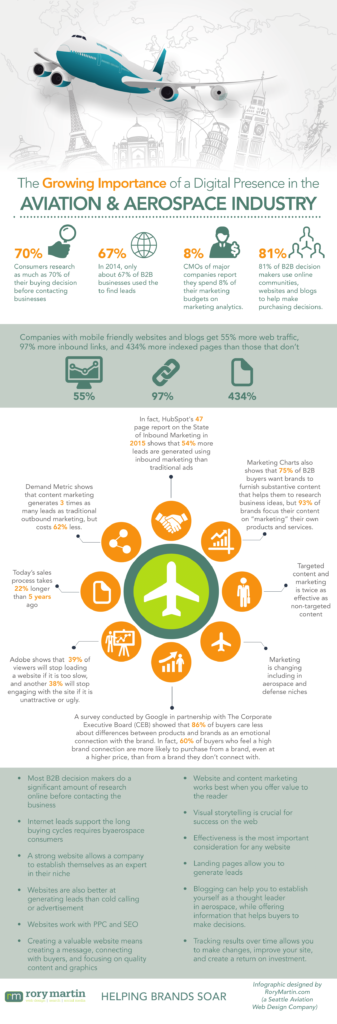
Statistically, the average person researches their way about 70% or more of the way through their purchase decision before contacting a business. In fact, Market Think showed that 81% of B2B decision makers use online communities, websites, and blogs to help make purchasing decisions. Combined with the fact that today’s sales process takes 22% longer thanks to Internet research according to SiriusDecisions, and it’s important that you have a website.
This shift in marketing approach is important for the aerospace industry as well, which has traditionally been offline, relatively secretive, and catering clients with long buying cycles. While the internet is often used to make quick sales, it can provide immense value for longer sales cycles as well. The Internet is well suited to long buying cycles, but also to showcasing brand strength, reputation, credibility, and capability over time, which can be highly beneficial to companies in the aerospace industry who rely on these factors for sales.
Using Website as a Marketing & Lead Generation Tool
Marketing aerospace on the internet requires that you have a strong website to appropriately showcase the brand, capabilities, and quality. A poorly done website says unprofessional in the same way that slapping a brochure together out of an email would have said poor marketing in 2005. A website is the easiest place online to create leads, convert leads into opportunities, and to make sales. In fact, HubSpot’s 47 page report on the State of Inbound Marketing in 2015 shows that 54% more leads are generated using inbound marketing than traditional ads, and Demand Metric shows that content marketing generates 3 times as many leads as traditional marketing, but costs 62% less.
It’s also easy to create leads through natural traffic through SEO (search engine optimization) and PPC (Pay Per Click) marketing, which will allow you to drive visitors to pages that you set up with relevant information.
However, bridging the gap between getting potential customers to a website and converting them into sales is something that takes a quality website, quality marketing, and an understanding of the consumer demographic.
Assessing Company Needs
If you know the audience, then you have some idea of what they want to see. For aerospace, the consumer demographic depends a lot on what you manufacture or design, and how much of it you manufacture or design. But, even the largest consumers like NASA might actually find you through the web.
Consumer demographic or buyer profiles can help you decide on:
- Website style
- Website direction
- User friendliness
- Content style
- Amount of content
- Number of forms
You also want to consider company goals. If the goal is to increase customer database by 500% over the next 5 years, then you need a very strong, interactive website that will get people clicking and sharing. On the other hand, if the company is looking for a modest growth or even maintenance of current sales, you have much less to consider.
Quality company goals should include the information you want to get acrossed, how you want to get it across (do you want gated whitepapers to create leads?), what functions the website needs, which features it needs, and how often you have to update it.
Finally, you have to consider search. If you’re going to optimize a website for SEO, then you have to plan for it. While the aerospace industry isn’t a very high competition market, you still want to be able to come up in search above competitors. This means increasing online presence, integrating a blog, creating texts and whitepapers, and integrating social media, while networking and creating content for peer and industry news sources. And, the website has to support all of that.
Creating Defined Goals and Objectives
If you know what you need, then you can create goals and objectives around those needs. This is important for web design, because it allows you to communicate company or brand needs and the defined objectives directly to the chosen website designer.
- Message – The company brand, voice, value and mission statements, etc. How do you want clients to perceive the business? What do you want say? Who is the company’s ideal client? What are its proof points? How aware of its services are buyers when they first visit the site? How educated in aerospace is the buyer? What are the goals for someone who visits the website? A survey conducted by Google in partnership with The Corporate Executive Board (CEB) showed that 86% of buyers care less about differences between products and brands as an emotional connection with the brand. In fact, 60% of buyers who feel a high brand connection are more likely to purchase from a brand, even at a higher price, than from a brand they don’t connect with.
- What Buyers Want – What is the client’s primary concerns or pain points? How does the company solve their concerns or problems? How does your company do it better than the competition? Research has shown that targeted content and marketing is twice as effective as non-targeted content, so it’s in your best interest to tackle these questions while creating your goals.
Creating Perceived Value – Perceived value is the effect of using high quality media and design to convince the reader that they are looking at a quality website, which should naturally belong to a quality company. Just like you wouldn’t buy a custom bench from a carpenter with a crooked table in his waiting room, most won’t invest in a large aerospace project if the ‘waiting room’ (website) looks shabby. Perceived value is the idea that things that look expensive are expensive, and therefore belong to very successful companies. This means that quality web design, quality graphics and photos, and good UX (user experience) actually create credibility for the website and the brand, even if it is new to aerospace. How important is perceived value? A Harvard Business Review showed that a 1% price optimization towards creating value resulted in an 11.1% increase in operating profit.
Reviewing an Existing Website
If you have an existing website, you can and should go over it. If you don’t, you can consider the following points for the new website.
Visual Storytelling – Visual storytelling is the concept of using graphics, images, and video to tell the brand’s story, even indirectly. It’s important for web design because it backs up text, reduces the amount of necessary text, conveys different ideas and emotions, and can work as a proof of concept or proof or quality for things like design and manufacture. According to the Online Publisher’s Association, 80% of consumers are more responsive to video ads than to text-only websites, 26% looked for more information about the subject of the video, and 46% took some action after viewing the video.
Effectiveness – Whether you have an existing website or not, the new one has to be effective at achieving goals. Your primary considerations should be whether the website ads to marketing efforts, helps you to generate leads, and helps you to create brand awareness. You also want to ensure that it provides education and information for consumers just entering the purchase process. Finally, you want the website to create brand or niche leadership, to show that you are authoritative in its niche in aerospace.
How Visual Design Affects Business
Visual design affects quality and perceived value, which we’ve already discussed, but it also affects a few other things. The first and most important is brand recognition. If someone can visit the site, see the logo, and then go away and not recognize the logo or remember the site, then you’re making a mistake and you’re probably losing customers because of it. Customers should be able to recognize the brand based on something as simple as colors and an airplane logo, you should use the same font, the same colors, and the same style, across the entire website. More importantly, you should know why you chose those things and how they tie into the brand. You also want to take some time here to do competitor research to ensure that the website stands out, so it doesn’t blend in with the competition. Adobe shows that 39% of viewers will stop loading a website if it is too slow, and another 38% will stop engaging with the site if it is unattractive or ugly.
Visual design also affects user experience. A clean, simple design that highlights the company’s primary offerings without offering too much is essential to success on the web. More than 50% of web traffic is on mobile, and number is set to rise, so simplicity is key to making an easy to use visual design. Website graphics affect usability, user experience, professionalism, and communication. In early 2015, LocalVox showed that 49% of sites fail to comply with basic usability principles, and 50% of online sales are lost because visitors can’t find content. You don’t want to make that mistake.
Integrating Changes
Every investment should have some type of return on investment, so you have to know why you’re doing something and what you should get out of it. And, for that reason, many site changes and the new site’s focus, should be based around creating a website that performs well in search, that creates leads, and that is capable of making your company money.
Optimizing for Aerospace Clients – In 2014, only about 67% of B2B businesses used the Internet to find leads. Today, that number is much is right around 84% according to Aberdeen. Consumers look for businesses on LinkedIn and Facebook and then go to their website where they expect to be met with the information, quality assurance, and sales data that will allow them to make a purchase decision. You can meet these expectations with the following items:
- Landing Pages – Landing pages should be easy to read, should tell a story, and should lead the person down the page from start to finish. Most landing pages get people to click by promising something and it is crucial that the landing page delivers on the marketing promise. You also have to convey enough information to interest a potential buyer, offer something of value, and create a call to action with a sign up form to get the reader into the sales funnel.
- Establishing a Blog – Companies that blog get 55% more web traffic, 97% more inbound links, and 434% more indexed pages than those that don’t according to HubSpot. That’s a lot, and it is worth consideration when you’re trying to build your company’s reputation as a thought leader in aerospace, and when you’re trying to draw potential consumers to the site. Marketing Charts also shows that 75% of B2B buyers want brands to furnish substantive content that helps them to research business ideas, but 93% of brands focus their content on “marketing” their own products and services. Therefore, it’s in your best interest to create informative content that helps readers make decisions.
- Launch Whitepapers and Other Brand Leadership – The capability to create whitepapers, reports, and other brand or thought leadership in aerospace will give you the freedom to do so when you’re ready. You should create gated HTML content that requires users to sign up or give you their email for things that offer extra value to readers. If it’s primarily a promotional piece, it should be readily available. What should you include? What information does a consumer need to know when researching the product?
- Search Optimization – SEO is necessary if you want to come up in search and this means optimizing the front and back end of the website, the content, and building the site’s links and reputation. You can start by researching a list of terms that you want the site to come up in search for, and then working to improve ranking for those terms over time.
- Integrating Email Marketing – Email marketing is still one of the most powerful tools available for B2B businesses because it allows you to directly contact consumers who have expressed interest in available services, and offer them what they need. With appropriate targeting, you can actually offer very direct marketing and create a high click-through and return on investment. This means that the site has to support collecting email addresses for a newsletter.
Figuring out marketing goals and working to integrate them into the site is essential if you want to see a return on investment, and that leads us to the next point.
Tracking Results
It doesn’t matter how much you put into a website, you have to track the results and make sure that you’re getting the results you want. If you aren’t, then you have to tweak and adjust the website until you do. The first and most important step is integrating analytics so that you can reliably track visitors, bounce rate, and other data. Google Analytics is a tried and true option, and includes premium and free versions. Is it important? The CMO Survey showed that CMOs of major companies report they spend 8% of their marketing budgets on marketing analytics.
Using Data – Once you’ve started collecting data, you can use it to track individual statistics like which pages users visit, the bounce rate (whether people leave immediately after reading one page), where users visit, exit rates, return visitors, visitor demographics, and many other details. Analytics can help you to track the success of marketing campaigns, help you to track the success of email campaigns, and can help you to track SEO. It also allows you to see which pages perform, which pages get users to sign up to forms, and much more. This data will allow you to make conscious decisions about making changes to the site, tweaking and optimizing, etc. And, this long-term optimization is crucial for ensuring that the website remains profitable.
A great website combines quality design with a value proposition that offers to solve problems for the company’s consumer demographic. It shows visitors that the company is expert in aerospace design or manufacture, that it provides quality, and that its employees are professional. A great website also allows you to collect leads, post content and to show that the company is a leader in the industry. And, while that’s a lot for one website, it’s necessary if you want to stand out in the aerospace niche.
If you want to know more about what goes into a website, contact Rory Martin, specialists in aerospace web design, for more information, a free quote, or for a look at some of our previous work.

How to Use Search Marketing to Boost Site Traffic – Seattle SEO Tips
Posted by Rory Martin in Search Engine Marketing on February 2, 2016
Any Seattle business with a web presence is most likely already using at least some form of search optimization, whether just for Google, or for all major search engines. SEO is a great way to build your traffic by making tweaks to help search engines see and rank your content. But, one thing traditional SEO often leaves out is making that content appeal to the reader as well as to the search engine, and that’s where search marketing comes in. Because it doesn’t matter how many impressions your page gets if it’s not getting hits.

What is Search Marketing?
Search marketing is the process of making your content, landing pages, and web pages more appealing to visitors, so that they want to click through on the page, and so that they read it all the way down, spend some time there, and possibly even buy something.
How Does Search Marketing Work
Where SEO is all about tweaking the back end of your site, and using keywords and phrases to tell search engines what you’re talking about, search marketing is all about content. Everything, from photos and videos to the title and meta description counts, and it’s very important.
Titles – Titles help Google find your content, but they also have to be clickable. This usually means keeping your title under 60 characters so the whole thing shows up in search, avoiding click bait titles, but making the title informative and intriguing. This can be a difficult balance to achieve, and if you’re trying to decide between intriguing or informative, always go for informative.
Meta Description – A lot of people skip the meta description since Google’s announcement that they don’t really use it in search ranking anymore, but this is a bad idea. Curating the content for your meta description allows you to control what readers see in search before they clip. Google automatically previews the first few lines of the page, these lines aren’t often very inductive to clicking, and might include a repeat of the title. Use meta descriptions to write a short description, and to tell people what they will learn after clicking. Just don’t give them so information that they don’t have to click.
Content – Content is king of search marketing, but it doesn’t have to be written content. Any content, including audio, video, photos, and text are all great, so long as you include keywords, metadata with searchable information, and a searchable description. A combination of different types of media is always a good way to go. Your content should be high quality, aimed at the reader rather than Google or Bing, and only really mention keywords when they naturally fall into the topic. You can use keywords in titles and subtitles as well, but make it natural, and use stop words like of, the, and to when naturally included in the topic.
Optimizing your pages for your visitors, rather than just for Google, is always a great idea, because it improves every aspect of your search marketing. When your pages are optimized for users, your click-through rate goes up, your bounce rate goes down, and these factors both boost your search optimization.
If you want to learn more about search marketing, contact Rory Martin, a local Seattle SEO company, for a free estimate on your search project.
How Reputation Management Affects Your Search Engine Results Pages
Posted by Rory Martin in Search Engine Marketing on January 5, 2016
Whether you’re running a local, international, or even online only business, your website rankings in search affect your traffic and your sales. Even if you’re just marketing to local consumers who look your business up online with their phones shortly before visiting your brick and mortar shop, you need to come up in search engine results pages (SERPS) and you have to look good in those SERPS.

Reputation management is one way to work towards achieving both at once, and while management is not the end of your SEO dilemma, it will help your optimization process.
What is Reputation Management
Reputation management is the process of attempting to control the information online about your brand so that if anyone searches for you, they see good things. This can involve working to improve your brand and improve customer support to naturally generate a great brand image, spot correcting or working issues out with unhappy customers, replying to bad reviews online, getting bloggers and social media gurus to review and talk about your products, improving your SEO so that your pages and not your competitors pages come up first in search, and using reviews as part of your strategy.
Using Reviews – Reviews are the easiest part of reputation management for SEO providing you have a great product or service. All you have to do is distribute your products out to people with blogs (trafficked blogs, don’t waste your money on random blogs), YouTubers, Instagrammers, and anyone else with influence. If you’re a local company in Seattle, you do, of course, want to approach local bloggers and influencers, and you can use a variety of sites like Klout and Tomoson to find them. You can ask for reviews on Amazon, any of your sales platforms, your website, Google Plus, your Facebook page, and on blogs, just try not to ask for everything from the same person.
Solving Problems – It’s also important that you work to manage and control problem posts that come up in search. For example. If you’ve purchased a business and you have a bad review from 5 years ago on the top of search, users reading that review won’t have any idea that you’ve changed management, or policies. You’ll have to correct the issue, which in that particular case, means getting your pages and other reviews on top of search instead of that bad review.
- Approach any customer complaint as seriously as possible as soon as they voice it. Try to solve the problem before it becomes a major issue.
- Get everyone involved, and ask customers how they would rate their experience before they leave your store or website. Just don’t be annoying.
- Offer free returns or replacements on products if they are broken, damaged on arrival, or not what was expected.
Getting Help from a Local Seattle SEO Company
Search engine optimization is a lot of work, and unless you’re not doing anything else, you probably don’t have the time or the experience to do it correctly. Local is also the best way to go, because you’ll be able to meet in person, hold the company accountable, and ensure that you’re on the same page without having to worry about time zones, not being able to get in touch, or similar issues. A local Seattle SEO company will also be able to help you with local trends, search terms, and location and micro location based terminology, which will help your site. They could also be familiar with your local competitors, local reviewers, and local websites you can contact to get reviews or a mention.
Want help with your search optimization? Contact Rory Martin for a free quote on your SEO.
How Reviews Benefit Your SEO & Your Social Media Marketing – Seattle Marketing Tips
Posted by Rory Martin in Search Engine Marketing, Search Engine Optimization, Social Media Marketing, Social Networking on December 8, 2015
Building your digital marketing strategy usually requires working in a great deal of different marketing techniques, and SEO and social media marketing are both very complementary to each other. While you probably already know that, one strategy affects both, as well as conversion and sales, and could be one of the most important strategies for companies with products to sell. That strategy? Reviews.
Whether you’re hiring a Seattle social media company to drive traffic and leads, or doing it yourself, your reviews greatly affect every part of your online marketing efforts, which makes them incredibly important.

How Reviews Affect Search
If you have a quality SEO company, then they’ve probably already put you on Google Local, and have likely started generating review strategies for your Google Plus and for your Facebook page. When users search for businesses in a specific location (I.E. Digital Marketing Company Seattle, Washington) on Facebook or on Google, they get back local search results based on businesses that have put their locations into the database. Here’s the important part. Your customer reviews show up in live search. If you have good reviews, this can greatly increase your conversion rate, because you automatically look more trustworthy.
How Reviews Affect Social Media
You probably already have some idea that reviews affect your social media. Social justification, or visible support for the brand, makes consumers much more likely to purchase, even if they’ve never heard of your brand before. For example, Amazon made more than $1 billion after introducing the “Was this review helpful” button, because users felt that individual reviews were that much more powerful. Pages with more reviews show up as more authoritative and more trustworthy, because users like popular opinion. Whether these reviews are on products, the entire business, or services doesn’t really matter.
How to Generate Reviews
The most important part of using reviews as part of your local Seattle social media or SEO strategies is that you shouldn’t use fake reviews. High quality reviews, from people who have actually used the product or service, are much better than any amount of fake, glowing reviews. If you’re on a social platform like Google or Facebook, the fake reviews can be removed, your account can be suspended, and you lose trust with your buyers if they catch you. Instead, using techniques like following up on an order with an email asking for a review, offering incentives in exchange for a review, using a slip or form in the package to remind users to review, or asking people in person is the best way to go. No, not all of your reviews will be glowing, but in an age where consumers know about fake reviews, it’s actually better for sales to have a small amount of negative reviews than to have all 5 star reviews. So, real reviews actually benefit you more than fake ones, even if they’re 3 or 4 star instead of 5.
Do you want to learn more about tactics for boosting your leads or sales? Talk to Rory Martin, a local Seattle social media company, and ask for your quote, or a consultation.
The Difference Between SEO and SEM – Seattle SEO Tips for SMBs
Posted by Rory Martin in Search Engine Marketing, Search Engine Optimization on December 2, 2015
SEO or search engine optimization is a term that almost everyone knows, even if you don’t understand what it does. SEM is a less popular term that means Search Engine Marketing, and while it can include SEO, there’s a lot more to it. If you’re just getting into search, or are planning to hire a Seattle SEO company to help you with your search traffic, then it is important that you understand the differences.

What is SEO
SEO or Search Engine Optimization requires working with Google, Bing, and Yahoo standards to create a website that is most likely to come up in search. By creating a site that is high quality, following guidelines for search engines, utilizing keywords so search engines know what the page is about, and increasing your authority, you can influence whether or not search engines show your pages. This is hugely beneficial for making sales, driving traffic, or creating leads.
What is SEM
Search Engine Marketing is subtly different from SEO in that instead of only directing efforts towards search engines, you’re also putting some effort into converting searchers into traffic. For example, if you’re coming up on the first page of Google but not really getting any clicks, you’re probably doing something wrong with your search engine marketing. By tweaking the title, meta description, images, and reviews, you can improve the click rate so you can get more traffic. Of course, search marketing can also include PPC (Pay Per Click) to help you capture keyword searches for a specific item.
Why is this important?
Technically you need both SEO and SEM to really succeed or capture as much of a keyword as you can. Combining conversion techniques and search engine optimization is crucial if you want your SEO results to be valuable. For example, you need the page to be highly relevant to the search once the user clicks on it. If it isn’t, you’ll have wasted your efforts.
In addition, you need your Seattle SEO company to work with you to create relevant SEO content. If you’re marketing to high level companies then you have to work with keywords that they would use, and if you’re working with budget consumers, you have to work with keywords they would look up. It doesn’t matter if you’re #1 on Google for “Top 5 Digital Displays” if you’re product is a digital advertising displays, because most users who find your keyword won’t want anything to do with your actual product. SEM is about relevance to the user, not just coming up in search.
Creating a great search campaign requires a knowledge of both SEM and SEO, and you’ll have to consider your specific user demographic, budgets, and location in order to properly select targeted keywords. The good news is that if you have a Seattle SEO company, they will do the work for you, just make sure they understand that you want to talk to consumers as well as to search engine bots.
Want to learn more about how SEO and SEM can help your business? Contact Rory Martin for a free consultation or quote.
How to Handle Links with Modern SEO – Seattle SEO TipS
Posted by Rory Martin in Search Engine Marketing, Search Engine Optimization on June 9, 2015
SEO and links have always gone together, and in previous incarnations of SEO strategy, have even dramatically affected ranking. Today, links are less important, primarily because most search engines have to sort through spam and black hat techniques, which create link farms and use guest blogs for links. With that in mind, the wrong links can actually hurt your search ranking, especially on sites like Google, with complex and sophisticated ranking techniques. If you want to get started with using links to boost your ranking, these tips from local Seattle SEO marketing companies will help you with getting started.
How Do Links Help Your SEO?
Links boost your Search Engine Optimization by boosting your perceived impact. Essentially, most search engine algorithms use inbound links to decide how many people are paying attention to you, how much attention you’re getting, and how much value you’re adding. Sites with more links going to them add more value to a link going to you, while sites with more links going out then coming in add less value to your link. Essentially, it’s like playing cards for chips, whoever has the most chips wins, and whoever has the least isn’t usually given that much attention. While the system is more complicated than that, you can get the basic idea from it. Links tell search engines that other people are listening to what you have to say, and that perhaps, they should too.

Do All Links Help?
Do all links help? Well, no. Unfortunately, a lot of people try to abuse links by ‘farming’ them, or using directories to create massive amounts of links directly to their website, to create a false appearance of influence. This is an extremely bad idea because most search engines will now penalize you for having too many links from sites that mostly have outbound links. They’ll also penalize you for putting up 15 or 20 websites and interlinking them to build your ranking. This can negatively affect your ranking, so it is important to avoid it.
Paying for links
Guest Blogging for links
Using link directories
Paying for a “100% Real Google Safe Link Building Technique Skyrocket to the Top OF Search in 24 Hours” type thing.
Putting up dozens of press releases for link value
What Links Should I Have?
Valuable links come natural sources, they are relevant to your website, and people click them. A link with no clicks is a link with no value. Unless people are following your link, your website usually isn’t being benefited from it.
News stations
Social media shares
People blogging about your services or reviewing your products
Mentions from larger websites
Features, shares, or mentions from similar websites
How do I Get Valuable Links?
A valuable link is a natural link. It is one that has been added for the benefit of the reader and not for the company. It is also on a completely relevant website or page. This might seem difficult at first, but the truth is that if you’re doing things to get links, you’re probably doing it the wrong way. Instead, try making connections, doing newsworthy items that will get you local mentions, appearing at local events and festivals, and getting yourself involved with other people. Not only will these things generate hype on and off of the Internet, they afford you the ability to build connections that are more than just a meaningless link that might not actually help you out with the next search update. You can also offer to create meaningful and relevant blog posts for similar magazines, websites, and news areas, in exchange for a company mention.
Want more help with building your search engine optimization strategy? Contact RoryMartin.com for a consultation to see what we can do for you.
How to Merge Your Marketing and SEO – Seattle SEO Tips
Posted by Rory Martin in Search Engine Marketing, Search Engine Optimization on May 12, 2015
How to Merge Your Marketing and SEO – Seattle SEO Tips
If you have a well thought out SEO strategy, then chances are you’re probably already integrating many of the marketing theories that you need to make your search optimization successful. Unfortunately, many Seattle businesses do not have a great search engine marketing strategy, primarily because they aren’t sure how to get started with one. Because most Seattle business owners aren’t necessarily marketing specialists, this is normal. If you don’t have your own Seattle SEO manager to help you with marketing and integrating it into your search optimization, then you probably need be
Research Your Market Demographic
You wouldn’t write an ad without knowing who you were writing it for, but many people write SEO content without really deciding who they’re selling to. If you’re selling shoes, then it’s probably logic that you’re main demographic is women between the ages of 18 and 45, and most of them will want a very specific type of shoe. If you’re operating a restaurant with catering services, the answer might not be quite as clear cut, but you can get started by analyzing your customers, writing up everyone in your immediate delivery area, and making some specific concessions based on what kind of food you serve. If you serve traditional Jewish cuisine, then your primary audience is most likely going to be Jewish, and on top of that, you can market towards people looking for food for parties, events, and weddings. On the other hand if you sell an assortment of high end cakes and pastries, you can narrow your prospects further to weddings and events, which allows you to easily narrow your demographic.
Use Retargeting Lists to Market To Them After They Leave Your Site

Just because you get someone to your site with SEO doesn’t mean that they’ve made a purchase. Rather the opposite. Most of the techniques used to bring customers in via search actually draw in customers who are still making a decision. Creating retargeting lists with more specific versions of your SEO keywords (I.E., Four-tier strawberry wedding cakes for delivery in Ballard) and creating PPC marketing ads for retargeting those customers can help you with turning your leads into sales instead of just traffic. The main problem with SEO is that you can draw in an unlimited amount of customers who want to read your content, but they probably haven’t made up their mind about what kind of shoe or cake they want just yet. If they wanted that, they wouldn’t be reading articles. So, adding them to a retargeting ad based on their initial search (I.E. 4-inch black pump) allows you to show them what they want to buy when they leave your site, so that they come back and make a purchase.
Evolve your Content For Your Customers
Every customer has something specific that they want to see and while it is true that you can’t please everyone, you can please your target demographic. What do they want to see, what do they need to see, and what would be beneficial for them. Changing your content over time to stand out and market directly to your customer base is the best way to go. Remember that content marketing strategies like SEO are not only about coming up in search, but also about creating yourself as an authority, so that customers remember you when they want to make a purchase.
The easiest way to set up a working SEO marketing plan is to get help from a local Seattle SEO specialist or consultant who not only knows search marketing but also local demographics, trends and business.
Seattle SEO Tips: Social Media Creats Backlinks
Posted by Rory Martin in Search Engine Marketing, Social Media Marketing, Social Networking on February 24, 2015
SEO has changed a lot over the last few years, especially where it pertains to Google’s search algorithm. The release of Panda and then Hummingbird not only nearly eliminated the usage of keyword phrases and backlink techniques that most users relied on for ranking, it also eliminated a great deal of content spamming, such as posting dozens of low-quality articles in hopes of ranking. But, with both keywords and backlinks pretty much out of the picture, how do you rank in today’s search engines?
We got together with several local Seattle social media companies, including Rory Martin, to discuss one of the prime ranking factors, social media.

You probably already know that social signals impact your ranking. Most search engines evaluate your audience by watching backlinks, social shares, traffic, and other data. What you might not know is that when an article gets a lot of shares, gets more traffic from social, or generates a lot of discussion on a Facebook or Google Plus page, you’re actually boosting your SEO. This is because Google ranks these social signals similarly to interaction on the page, similarly to guest posts and directory links, and essentially, as a signal that your content is popular, or something that people want to read.
But that’s not all.
Social media also provides feedback that you can use to boost your user satisfaction. Because Google’s Hummingbird is primarily about user satisfaction, that’s in your best interest. If users tell you that you need more content, write longer articles. In fact, Google is now ranking pages that are 1,500 words or longer in their own category, ‘in depth information’. By listening to what your social media is saying about your shares, your links, and your posts, you can tweak what you’re putting up to increase engagement, and therefore boost your ranking and SEO.
Social Media Shares Result in Links
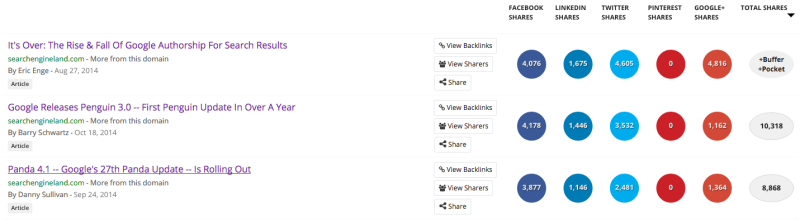
Buzzfeed did an article on the most shared articles on Search Engine Land, who promptly turned around and did a study on it. They then cross checked those with the most shares, and found that higher numbers of social shares had the highest number of backlinks. While that doesn’t necessarily mean that the social shares are backlinks, it does say that more social sharing results in more backlinks. Rather than an effect, it’s a cause and effect, which results in links, which still benefit your ranking.
Social Media Drives Traffic

Finally, if you create high-quality, consumer oriented content for social media, then you’re probably driving traffic from your social to your web page. More importantly, because Google now ranks high-quality content as well as keywords and other data, and traffic is a ranking signal, the combination of these two items is a very clear signal to Google, Bing, and Yahoo that you deserve to be ranked. While you might still have competitors who are ahead of you on the quality content game,
SEO is a long-term strategy, and Social Media can be either or. However, analytics show that the two are now intrinsically linked, and if you want to succeed with SEO, social media platforms can help.
What’s New for Seattle SEO in 2015
Posted by Rory Martin in Search Engine Marketing, Search Engine Optimization on January 20, 2015
Marketing your website can be a big deal, especially when you’re trying to do so on a limited budget. SEO is usually the first thing that comes to mind when thinking of web marketing, but unfortunately, many people know surprisingly little about it, that it can change frequently, or that techniques which helped your site last month might actually hurt your website this month. SEO trends can vary a great deal depending on which search engine you’re marketing to, but the following include general rules for new SEO trends in 2015. If you need more help, consider hiring or asking a Seattle SEO expert.

Keywords are Out But Not All the Way
In 2011, a 4% keyword density was the thing for putting you on the top of search. Fortunately, that trend is completely over and you no longer have to worry about percentages and keyword volume. But that doesn’t mean that you can ignore keywords completely. You still have to give Google, Yahoo, Bing, and other search engines a good idea of what you’re talking about. A good rule of thumb is to use keywords as naturally as possible, only using them when you would without paying attention. You can also use Google’s SKTOOL to find a series of related keywords, you can use a thesaurus (Or just google) to find synonyms of your keyword, and then mix up phrasing and word usage. Keep in mind that your grammar and spelling should always be accurate.
Back End Optimization is More Important Than Ever
Back end optimization is often overlooked by many quick sell SEO companies, and their products and services rarely drive results. Back end optimization includes making sure that your website is search friendly, creating site maps, using appropriate meta tags, and so on.
Unique Content is Necessary to Rank
Another very important thing to consider about modern SEO is that if your content is not unique, you will not rank. This means that not only do you have to write 100% unique content for your pages, you also have to avoid doing any previously good techniques like spinning the article to post on other sites.
Quality Over Quantity
Good grammar, great spelling, informative content, and content longer than 350 words are all more likely to rank than throwing up a dozen small posts with no attention to detail. All search engines are now creating grammar and helpfulness metrics, which means that you have to start paying attention to content, quality, and readability. In some cases, this may mean paying for a professional writer.
Stop Link Farming
Whether you’re putting up guest posts, commenting with links back to your website, or adding your website to every directory you can get your hands on, just stop. It’s not helping you, and in fact, in enough quantity, it may even get you blacklisted. Instead, consider creating guest posts for the sole purpose of driving people to your website. If you don’t think the users will click through and follow it, then the link is worthless.
SEO is changing a lot, and whether you’re trying to market to a local Seattle audience, or aiming for something a little larger, it is important to follow the rules. Paying attention and keeping up to date with new rules is the only way to rank, unless you want to hire a professional Seattle SEO team to handle it for you.
Seattle Social Media Tips: Paid, Owned, & Earned Marketing
Posted by Rory Martin in Search Engine Marketing, Social Networking on October 6, 2014
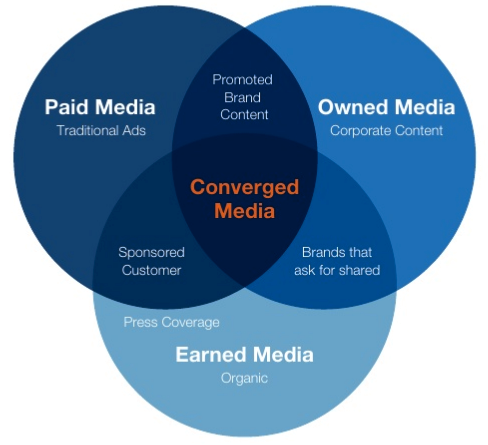
Digital marketing is quickly becoming one of the most important outlets for businesses that want to grow themselves, but most users don’t understand the differences between various types of online marketing except that some are free and some are not. Understanding various types of media is important for Seattle businesses that want to promote themselves in a digital setting, mainly because understanding means that you can use it to create strategies that work.
What is Paid Media
Paid marketing includes most basic paid advertisements including PPC, banner ads, and paid coverage such as a paid blog or article on a popular website.
What is Earned Media
Earned media is media or marketing material that you earn without paying for. Examples include press release coverage, coverage in a local newspaper, unpaid coverage or reviews on blogs, and user shares. Earned media is often accomplished by sharing valuable information and data, such as infographics and videos, doing something noteworthy, or reaching a press worthy milestone. Earned media also includes partnerships, offering free content in exchange for a review, and generally any sort of PR efforts.
Owned Media
Owned media is the least important of these three, but still important for digital marketing. Owned media includes any media content or hype created by the company for the company. For example, a blog posted on the business website is a great example of owned media.
How to Use Them
While the ideal for almost any business would be to create a great deal of earned media through viral content, the truth is that it is rarely that simple. For example, earned media is usually either paid or owned media, which may confuse you at first until you realize that you have to create content that is either yours or have someone else create it for you. The most common reasons that content goes viral is social sharing, which also means that you have to first get users to see it. Essentially, unless you already have a fairly large number of visitors to your company blog or YouTube channel, then paid media in the form of posting your content elsewhere, or paying for advertisements, is the best way to go to create earned media.
So earned media, which is created from shares and interest in your topics, is typically generated from paid media. The result is a marketing strategy that should include both paid and owned media options, both with the intention of created earned media through shares and additional coverage.
Any good local social media strategy will include paid and owned media with a marketing strategy for creating earned media. If you want to make it happen for your business, you need a Seattle social media company that knows how to work with all three to create results. Hybrid campaigns are the most successful option, and also the most logical. Companies ranging from General Motors to Orange are taking advantage of campaigns that maximize the use of every type of media, and you should be to.
Contact us to find out more.
Recent Comments